
Storm Damage Roof Repair in Boise, Idaho and Treasure Valley
Complete Restoration After Nature's Most Destructive Forces
Professional Storm Damage Roof Repair
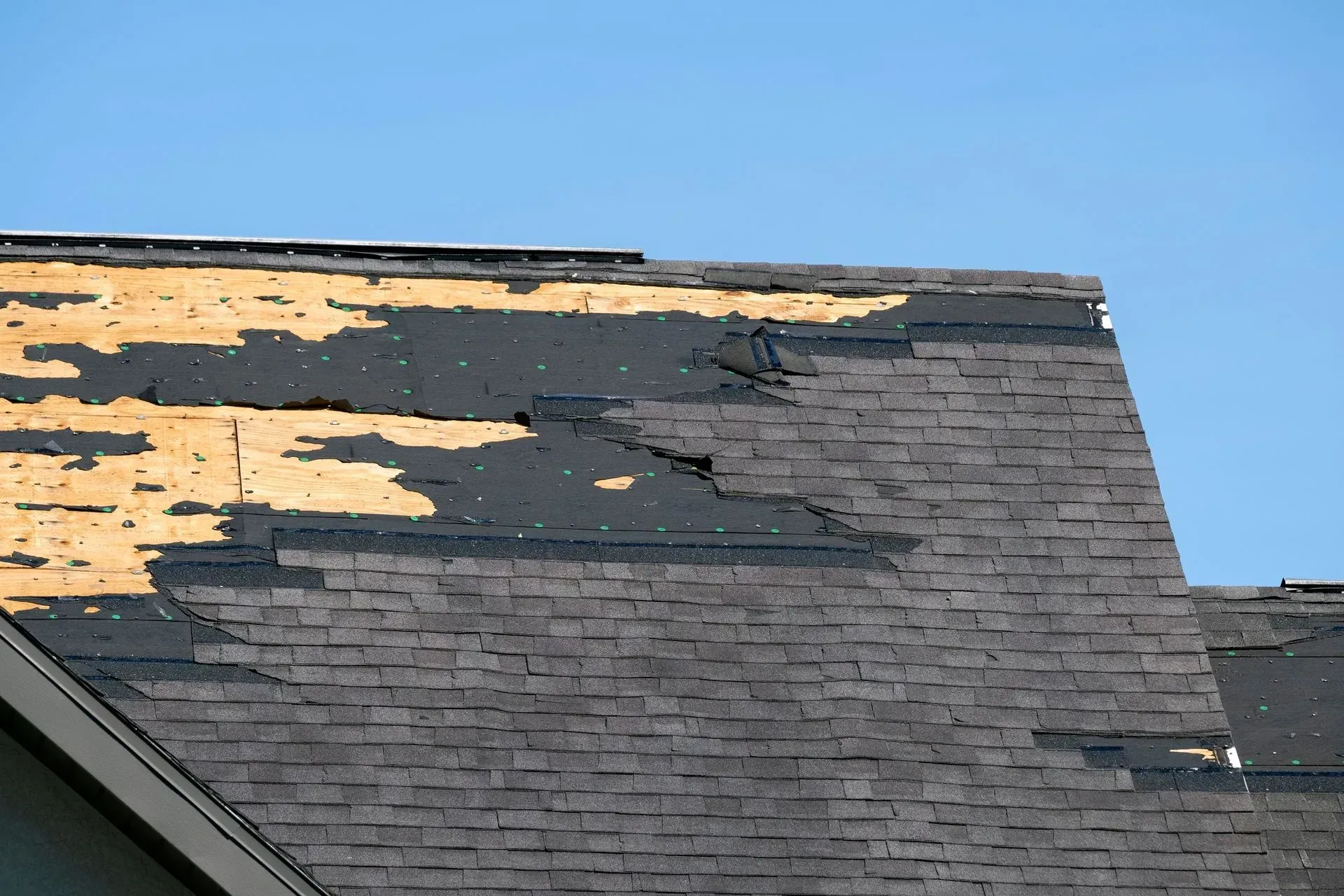
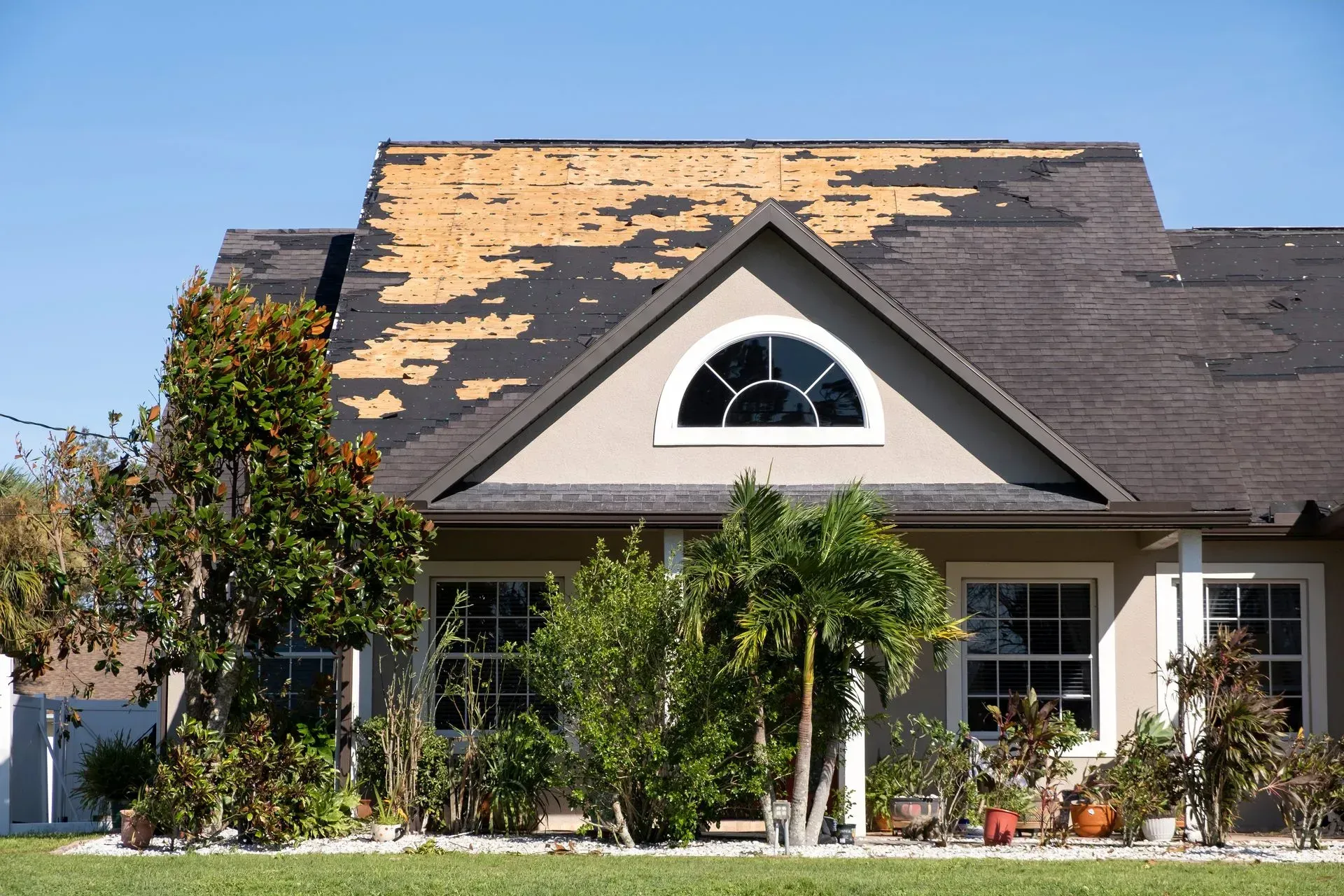
Storm damage repair in Meridian addresses destruction from heavy rain, high winds, fallen debris, and hail that can devastate roofing systems in minutes. Professional restoration returns your roof to full protective capacity while preventing long-term structural issues.
Ridge Crest Roofing provides comprehensive storm damage assessment and repair services.
Idaho's severe weather patterns, from intense thunderstorms to damaging hail events, require specialized repair approaches that address both visible damage and hidden structural compromise throughout affected roof areas.
Schedule storm damage repair in Meridian and Treasure Valley areas today.
Why Choose
Professional Storm Damage Repair in Meridian and Treasure Valley?
Storm damage assessment identifies the full scope of destruction, from obvious impact points to subtle structural shifts that compromise roof integrity. Heavy rain, high winds, fallen debris, and hail each create distinct damage patterns requiring specific repair techniques.
Professional repair addresses immediate water intrusion while evaluating underlying damage that may not be immediately visible. Ridge Crest Roofing understands how Meridian's storm patterns affect different roofing materials and structural systems throughout the repair process.
Hail damage often extends beyond surface impacts, creating stress fractures and seal failures that lead to progressive deterioration if not properly addressed during comprehensive restoration efforts.
Begin your storm damage repair in Meridian and Treasure Valley areas immediately.
What Should Meridian Residents Expect
Our storm damage expertise provides complete restoration that withstands future weather events while addressing all current damage comprehensively.
- What's included in the service? Complete evaluation of heavy rain, high wind, fallen debris, and hail damage throughout your roof system
- How do we handle insurance claims? We document all damage thoroughly to support your claim while beginning immediate protective measures
- What makes our approach different? We identify hidden damage that other contractors miss, preventing future problems from unrepaired storm impacts
- Why is local expertise important? Meridian's specific storm patterns create predictable damage types we recognize and repair effectively
- How do we prioritize repairs? Emergency stabilization comes first, followed by comprehensive restoration that exceeds pre-storm condition
Restore your home's protection with professional storm damage repair.
Contact us today to schedule storm damage repair in Meridian and Treasure Valley.
Reliable Roofing in Meridian, ID You Can Count On, Rain or Shine.
We walk Treasure Valley homeowners through this process regularly and the first thing we tell everyone is the same. It is not as complicated as it feels right after a storm when you are stressed about your roof and not sure where to start.
Here is what the process actually looks like.
Step
1
Get photos before anything else
Right after the storm, before anyone touches anything, walk around the outside of the house and photograph everything you can see from the ground. Roof surface, gutters, fascia, siding, anything that looks different from before. If you have old photos of your roof from before the storm even better. Do not get on the roof yourself. What you can see from ground level plus what we find during our inspection is more than enough to start a claim.
Step
2
Call us before you call your insurer
Seriously, do this first. Before you open a claim with State Farm, Farmers, Liberty Mutual or whoever you are insured through, let us come out and drone assess the roof so you know exactly what you are dealing with. Filing a claim based on what you could see from the driveway is not the same as knowing the full picture. If the damage turns out to be minor and under your deductible it may not be worth filing at all. If it is significant you want to go into that conversation with your insurer knowing exactly what is up there.
Step
3
Open the claim with your insurer
Once you know what you are working with, call your carrier and report the damage. Have your policy number ready and know the date the storm hit. Most Idaho insurers including State Farm, Farmers and Liberty Mutual want claims filed within one to two years of the event but do not sit on it. The longer you wait the harder it gets to connect the damage to a specific storm and carriers notice when claims come in a long time after the fact.


Step
4
Be there for the adjuster visit
Your insurer sends an adjuster out to assess what they are willing to cover. We strongly encourage homeowners to have us present for this visit. Not because adjusters are dishonest but because damage gets missed on quick walkthroughs and we know what to look for on Treasure Valley roofs after a hail or wind event. We have been through this process with State Farm, Farmers and Liberty Mutual adjusters many times and knowing how each carrier typically approaches an assessment helps make sure nothing falls through the cracks.
Step
5
Go through the estimate carefully
After the adjuster visit your insurer sends a written estimate of what they will cover. Read every line. Adjuster estimates miss things, apply depreciation in ways that catch homeowners off guard and sometimes undervalue repair costs for this specific market. If what they are offering does not line up with what we found on the roof we help you work through the supplement process to get the estimate corrected before work starts.
Step
6
We get the roof fixed
Once the claim is settled we schedule the work. You cover your deductible, the insurer handles the rest and we fix the roof properly. We have done this with homeowners insured through State Farm, Farmers, Liberty Mutual and most other major Idaho carriers across Boise, Meridian, Eagle, Nampa and the Treasure Valley. We know how to keep the process moving so it does not drag on longer than it needs to.
Does Homeowners
Insurance Cover Roof Storm Damage in Idaho?
Generally yes, but the details matter and knowing them before you file saves a lot of back and forth with your carrier.
Most standard homeowner's insurance policies in Idaho cover sudden and accidental damage caused by a specific storm event. So things like hail that cracked your shingles during last Tuesday's storm, wind that lifted and tore off sections of your roof, a tree branch that came down and punched through the decking, or rain that got in through storm-created openings. Those are the situations your policy was designed for and in most cases State Farm, Farmers, Liberty Mutual and other major Idaho carriers cover them without a fight when the claim is filed correctly and the damage is documented properly.
Now here is where it gets more nuanced because this is also where a lot of Idaho homeowners get surprised.
What is typically covered
- Hail damage to shingles, flashing and gutters from a specific storm event
- Wind damage including lifted, missing or torn shingles
- Falling trees or branches that damage the roof structure
- Water intrusion that resulted directly from storm-created roof damage
- Emergency tarping costs to prevent further damage after a storm
What is typically not covered
- General wear and tear over time, shingles that are simply old and degrading
- Neglect, meaning damage that existed before the storm and was never addressed
- Gradual leaks that developed slowly over time rather than from a specific event
- Improper installation issues that predate the storm
- Cosmetic damage only, meaning the roof still functions but looks different after the storm
The wear and tear exclusion is the one that catches Boise and Meridian homeowners most often. If your roof was already 18 years old and showing its age before the storm came through, your insurer may argue that some or all of the damage is attributable to the age and condition of the roof rather than the storm itself. That is a legitimate coverage dispute and it is exactly the kind of situation where having a professional inspection completed before the adjuster arrives makes a real difference in how the claim gets resolved.
One more thing worth knowing. Idaho homeowners typically have one to two years from the date of the storm to file a claim depending on your specific policy language. Some policies are tighter than that. Check your policy rather than assuming you have time to deal with it later. We have talked to Treasure Valley homeowners who waited too long after a hail event and found out their window had closed. Do not let that happen when the damage is sitting on your roof right now.
If you are not sure whether what you are seeing on your roof after a storm is covered under your policy, call us at (208) 353-1798. We come out, assess what is there and give you an honest read on what you are dealing with before you make any decisions about filing.
Types of
Storm Damage We Repair
Idaho storms do not discriminate. Hail, wind, ice, falling debris, heavy snow, the Treasure Valley gets versions of all of it depending on the season and what rolls through Ada County in a given year. Here is what we see most often on Boise and Meridian roofs after a storm event and what the repair actually involves.

Hail damage
Hail is the big one in Ada County. It comes through fast, hits hard and leaves damage that is not always obvious from the ground but is very visible up close. On
asphalt shingles hail knocks granules loose at the point of impact, exposing the asphalt underneath and creating a circular bruised area that accelerates deterioration at that spot. Enough hail hits across a roof and the shingles are compromised across a large portion of the surface even when they look mostly intact from the street. On metal roofing hail typically leaves cosmetic denting that does not affect performance but on softer metals or thinner gauges can occasionally affect the panel integrity. We drone assess after every significant Ada County hail event and give homeowners a straight read on what the storm actually did.
Wind damage
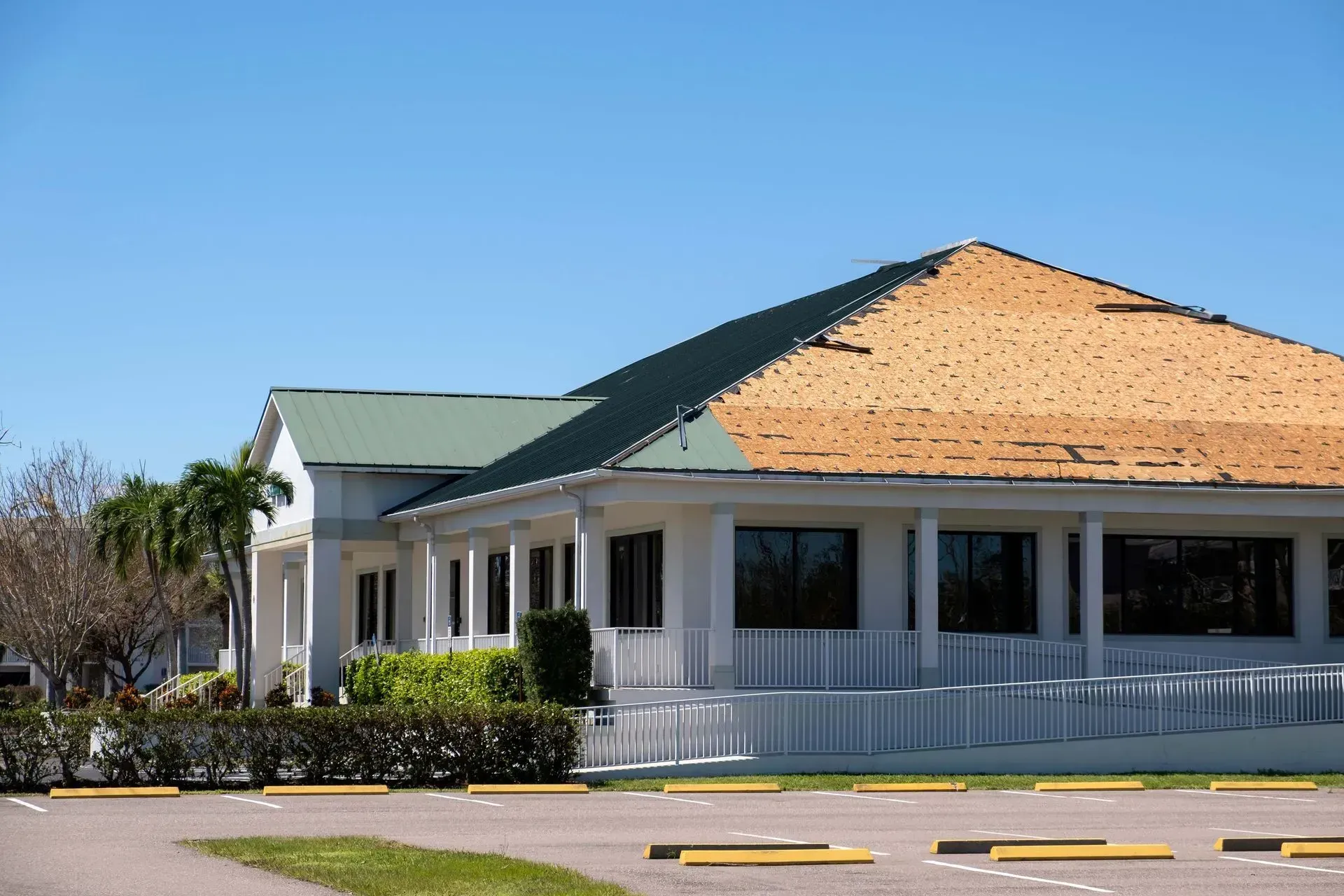
Boise and the Treasure Valley get real wind, particularly in spring and during weather system transitions. Wind damage on a roof shows up as lifted shingles where the adhesive strip on the back has broken the seal, torn or missing shingles that have blown off the roof entirely, damaged ridge cap and flashing that has pulled away from the surface. Lifted shingles that have not blown off yet are the sneaky ones because they look fine from the ground but are no longer sealing properly and every subsequent rain event is finding its way underneath. We find these regularly on Meridian and Eagle homes after significant wind events.
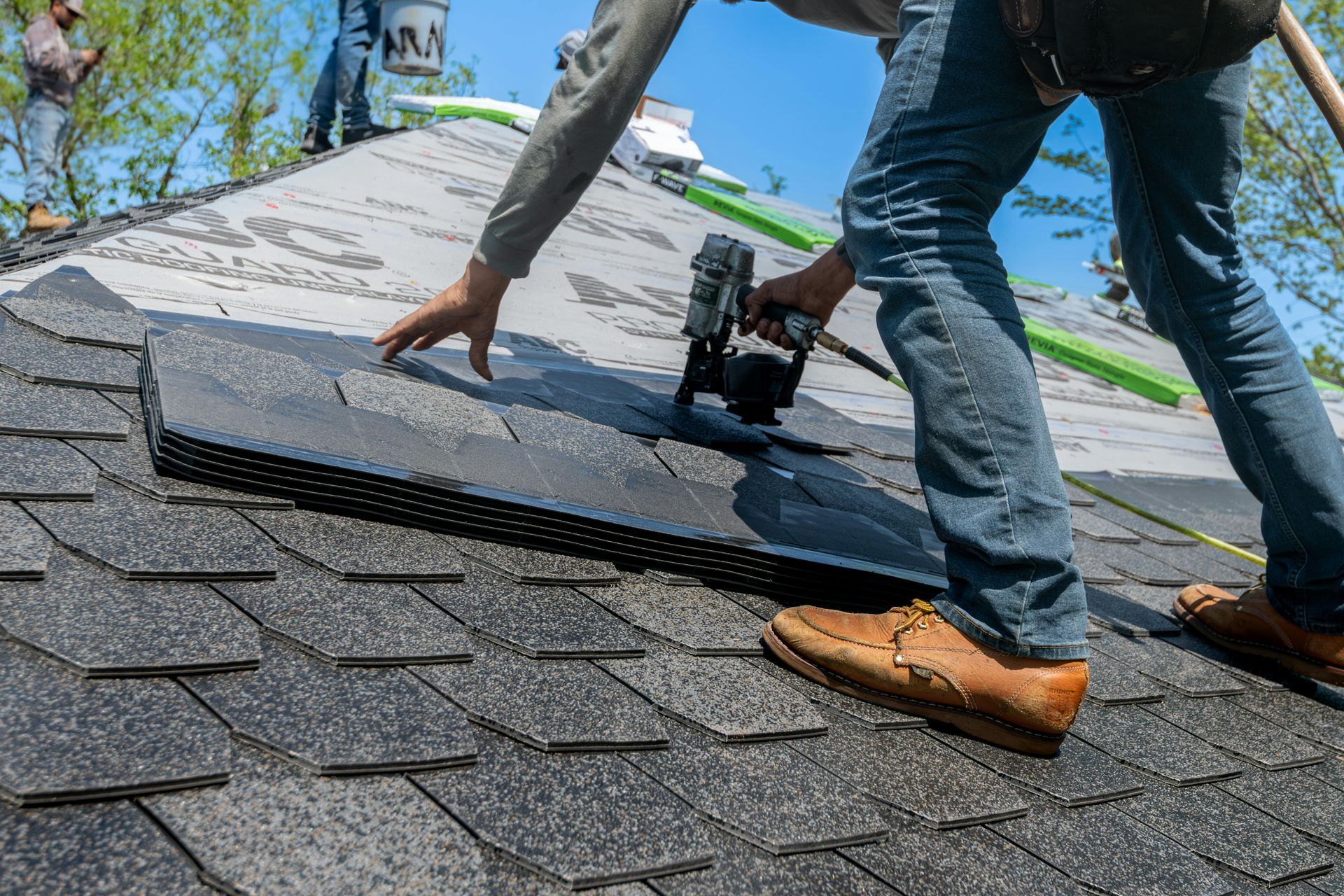
Missing shingles
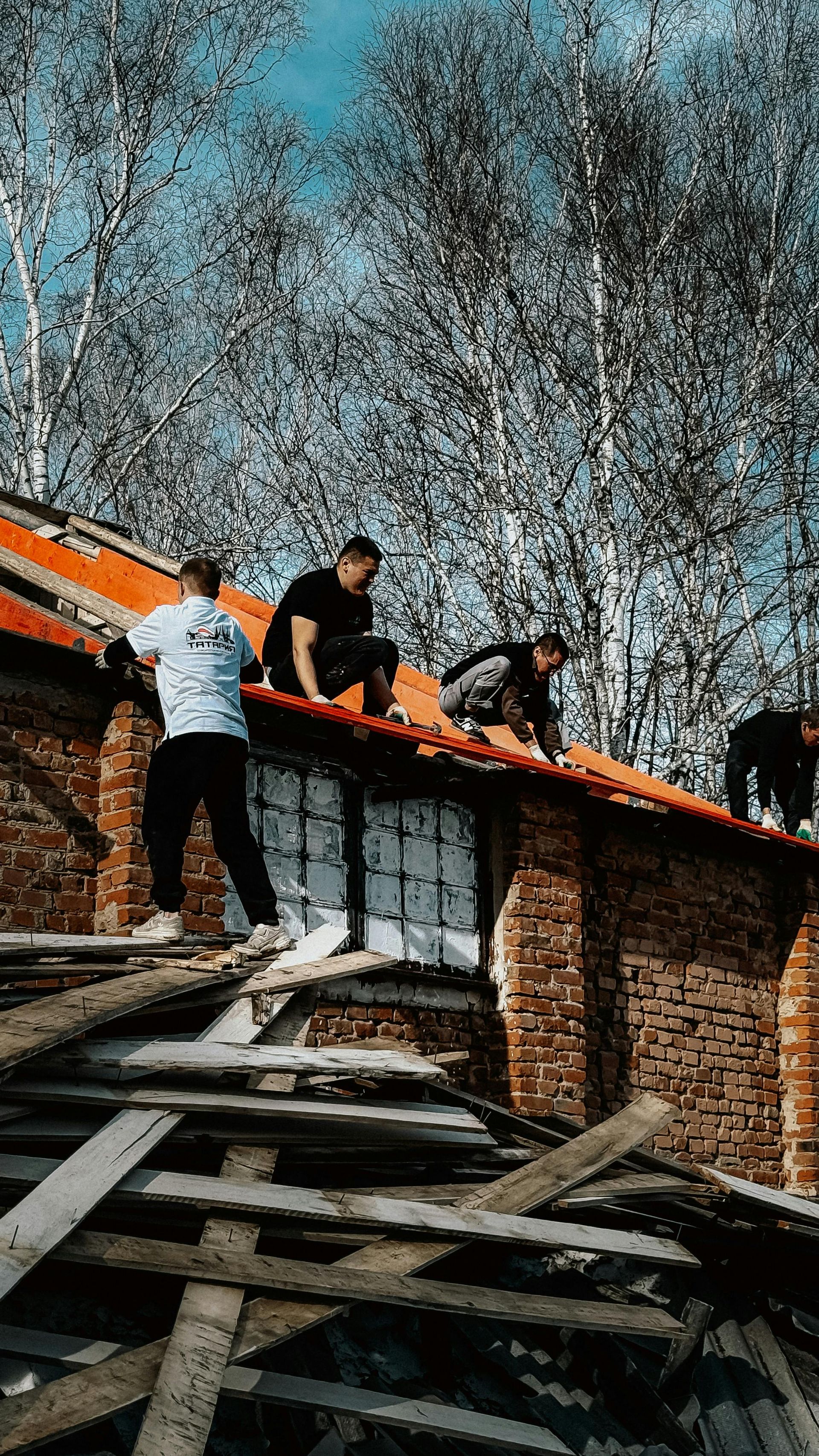
Sometimes wind damage is straightforward. Shingles are gone, decking is exposed and it is raining. Missing shingles need to be addressed quickly before water infiltration starts doing damage to the structure underneath. We match replacement shingles to the existing roof as closely as possible and address the underlying cause, usually a failed adhesive strip or improper original installation, so the replacement holds properly rather than repeating the same failure in the next wind event.
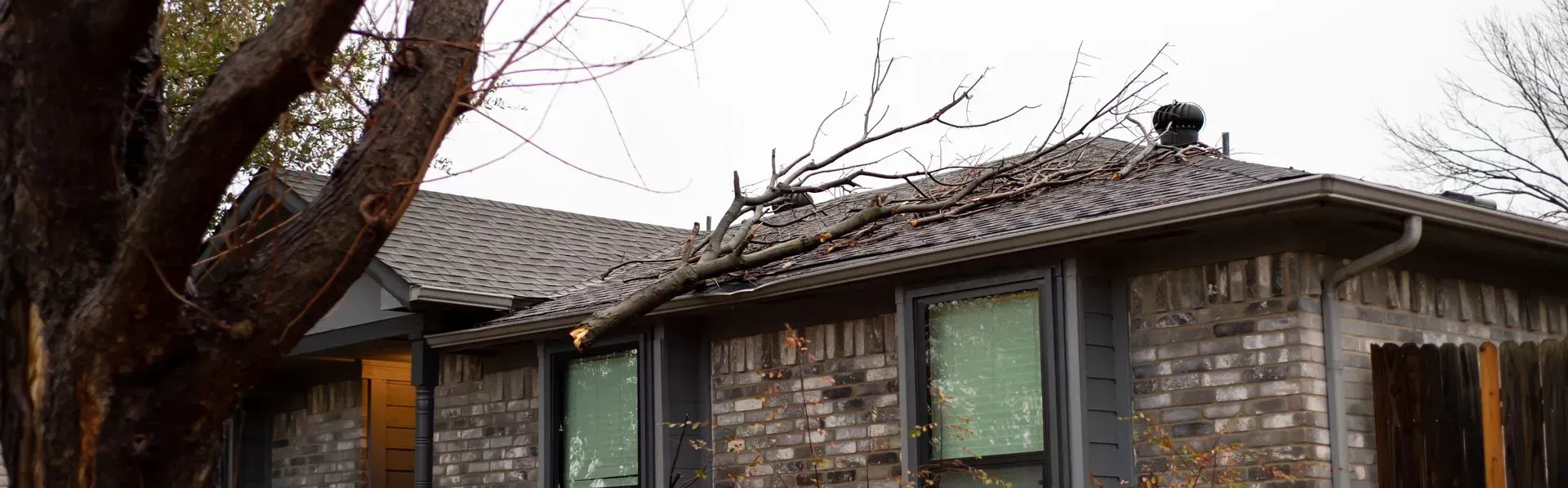
Fallen tree or branch
Tree and branch impacts are some of the more dramatic storm damage calls we get across Boise and the Treasure Valley. A significant branch impact can punch through the decking, crack rafters and create an opening that requires structural repair before any roofing work happens. Smaller branch impacts damage shingles and flashing at the contact point without structural penetration. Either way the assessment needs to happen before the extent of the damage is understood and emergency tarping gets the opening covered while the full repair gets planned and scheduled.
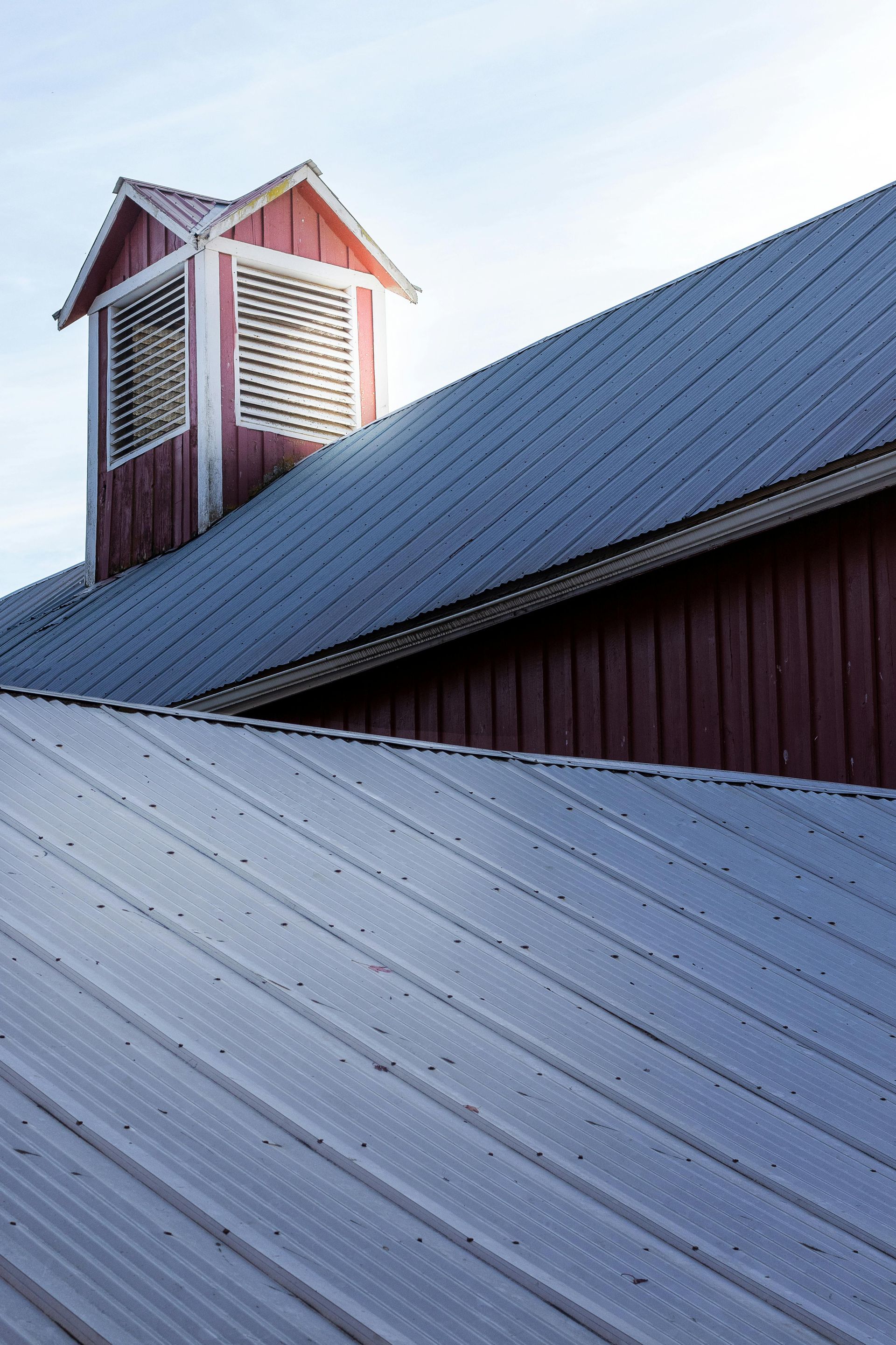
Ice dams
Ice dams are more of a Boise Foothills and elevated Treasure Valley problem than a flat valley floor issue but they come up regularly in colder winters. An ice dam forms when heat escaping from the living space warms the roof deck, melts snow from the bottom up and that meltwater runs down toward the cold eave where it refreezes. The backed-up ice forces water under the shingles and into the structure. Left alone ice dams cause significant water damage to decking, insulation and interior ceilings. The right fix addresses both the immediate damage and the underlying ventilation issue that allowed the dam to form in the first place.
Water infiltration
Sometimes the storm damage is not dramatic from the outside but the water is already inside. Ceiling stains, wet insulation in the attic, moisture showing up on interior walls near the roofline. Water infiltration after a storm can come from a dozen different entry points, failed flashing around a chimney or vent pipe, a compromised valley, lifted shingles that allowed wind-driven rain underneath, a cracked ridge cap. Finding the actual entry point is the diagnostic work that has to happen before any repair makes sense because patching the wrong spot just moves the problem. We track down the source and fix it properly rather than applying a surface repair to something that needs a different solution.
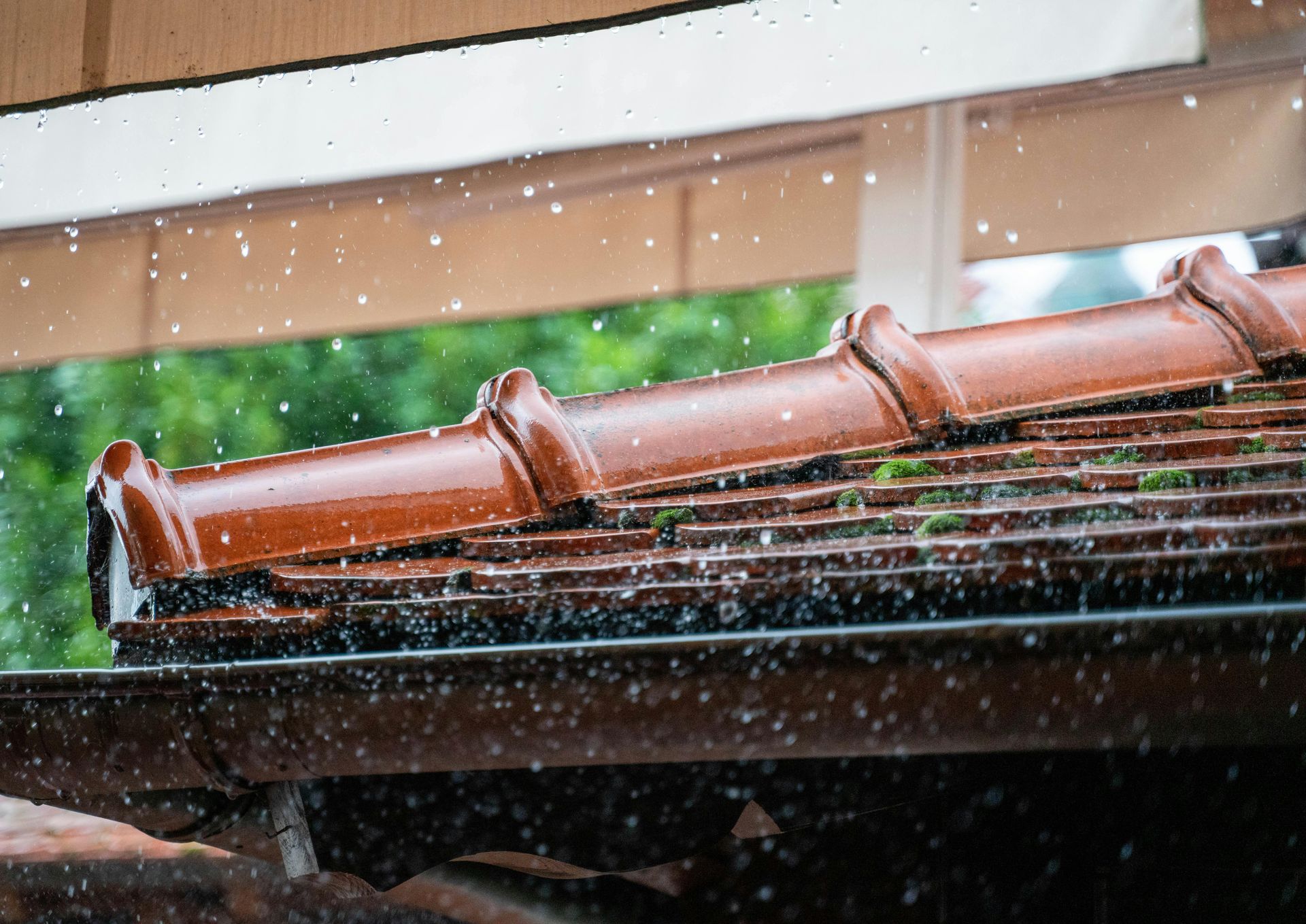

Roof Actively Leaking After a Storm? We Do Emergency Tarping.
When a storm opens up your roof and water is actively getting in, every hour matters. Water that gets into the decking, insulation and structural framing does damage that compounds quickly and turns a roof repair into a much bigger and more expensive project than it needed to be. Emergency tarping stops that clock.
We provide emergency tarping across Boise, Meridian, Eagle, Nampa and the Treasure Valley for situations where a storm has created an active opening in a roof that cannot wait for a full repair to be planned and scheduled. A fallen tree branch that punched through the decking, wind that tore off a large section of shingles, hail that compromised enough of the surface that water is finding its way through. These are the situations where tarping buys the time needed to assess the full damage, work through the insurance process if applicable and get the proper repair completed without the interior of the home continuing to take damage in the meantime.
Tarping is also a covered expense under most Idaho homeowner's insurance policies as a protective measure to prevent further storm damage. State Farm, Farmers, Liberty Mutual and most other major Idaho carriers recognize emergency tarping costs as part of a legitimate storm damage claim. Document that the tarping happened, what it covered and when it was done.
A few things worth knowing about emergency tarping specifically. A tarp is not a repair. It is a temporary protective measure that gets the opening covered while the real work gets planned. A properly installed tarp secured correctly to the roof structure will protect the interior through additional rain events but it is not a substitute for getting the damaged area properly assessed and repaired as soon as the process allows.
If your roof is actively leaking right now do not wait.
Call (208) 353-1798 now for emergency roof tarping — or visit our Emergency Roof Repair page for immediate assistance.
Storm Damage Roof Questions We Hear From Boise and Treasure Valley Homeowners
How quickly can you get out to inspect storm damage?
We try to get out as fast as we can after a significant storm event and that is not just a line. Ada County hail and wind events affect a lot of properties at once and we know homeowners are anxious about what happened to their roof. Call us at (208) 353-1798 and we will get you on the schedule. If you have active water intrusion happening right now tell us that when you call. Emergency situations move to the front.
What if the insurance adjuster underpays my claim?
It happens more than most homeowners realize and it is not always intentional. Adjusters move fast, they cover a lot of properties after a storm event and things get missed. If the estimate your insurer sends does not line up with what we found on the roof during our inspection, we help you work through the supplement process. That means providing additional documentation, repair cost substantiation and working directly with your carrier to get the estimate corrected before work starts. You do not have to just accept the first number your insurer puts in front of you.
Will filing a roof insurance claim raise my premiums in Idaho?
Possibly, and it is a fair question to ask before you file. A single weather-related claim typically has less impact on premiums than multiple claims in a short period. Some Idaho carriers offer claim forgiveness provisions depending on your policy. Before filing on damage that is borderline, meaning close to your deductible anyway, it is worth a quick call to your agent to understand what the premium impact might look like for your specific policy. That said for significant storm damage the cost of not filing almost always outweighs the potential premium impact.
How long does storm damage roof repair take once the claim is approved?
Most residential storm damage repairs in the Treasure Valley wrap in one to two days once materials are ordered and the crew is on site. The timeline from the storm to completed repair depends more on how long the insurance process takes than how long the actual work takes. We keep things moving on our end and work with State Farm, Farmers, Liberty Mutual and other Idaho carriers regularly so we know how to avoid unnecessary delays in the approval and scheduling process.
Do I need to be home during the inspection or repair?
For the initial inspection it helps to have someone available who can answer questions about what happened during the storm and where any interior symptoms showed up if applicable. For the actual repair you do not need to be home as long as we have access to the property. We do a walkthrough with you after the work is complete before calling the job done so plan to be available at the end of the job day.
What if my roof was already older before the storm?
Will insurance still cover it? Depends on the policy and the carrier. Some Idaho policies pay out actual cash value which factors in depreciation based on the age and condition of the roof before the storm. Others pay replacement cost value which covers the full cost of repair or replacement regardless of the roof's age. Knowing which type of coverage you have before the adjuster arrives changes the conversation significantly. We help homeowners understand which type of payout their policy provides and what that means practically for their out of pocket costs after the claim is settled.
Can you work directly with my insurance company so I don't have to manage the back and forth?
We can and we do on a lot of Treasure Valley storm damage jobs. We provide the documentation, repair estimates and supplemental information your carrier needs in the format they are looking for. You are still the policyholder and the decisions are yours but we handle the roofing side of the communication so you are not stuck playing telephone between your insurer and your contractor trying to get everyone on the same page.