
Protect Your Home — Expert Roof Repairs in Boise You Can Trust
Book Your Roof Repair Today
in The Treasure Valley
Need a quick fix for your roof in Boise? Ridge Crest Roofing is here to help with shingles, tile, metal, and TPO repairs. Hear the reassuring sound of tools expertly restoring your roof. No repair is too small for our dedicated team, and we're committed to getting your roof back in top shape. Wondering if we can handle your specific issue? Our experienced technicians are ready to tackle any challenge.
Our repair services are designed to be swift and effective, ensuring minimal disruption to your home life. Trust us to keep your roof in excellent condition.
Secure your appointment
for a roof repair today!
Key Benefits of This Service
Opting for our roof repair services means choosing efficiency and expertise. Here are the key benefits you can expect:
- Rapid response to repair requests
- Expert assessment of damage
- Use of high-quality repair materials
- Skilled and experienced technicians
- Long-lasting repair solutions
Plan your roof repair with us and ensure your home stays protected!
Roof Repair Services
We Provide
Over 35 years in roofing means we have seen pretty much every way a roof can fail. Here is what we handle on repair calls across Boise, Meridian, Nampa and the rest of the Treasure Valley.
Leak Repair
Water showing up on your ceiling is almost never coming from directly above the stain. It travels, sometimes several feet along decking and framing before it drips through. We have been finding the actual source of leaks for a long time and we know what to look for. We trace it back to the entry point, fix it properly and check the surrounding area because leaks rarely happen in isolation.
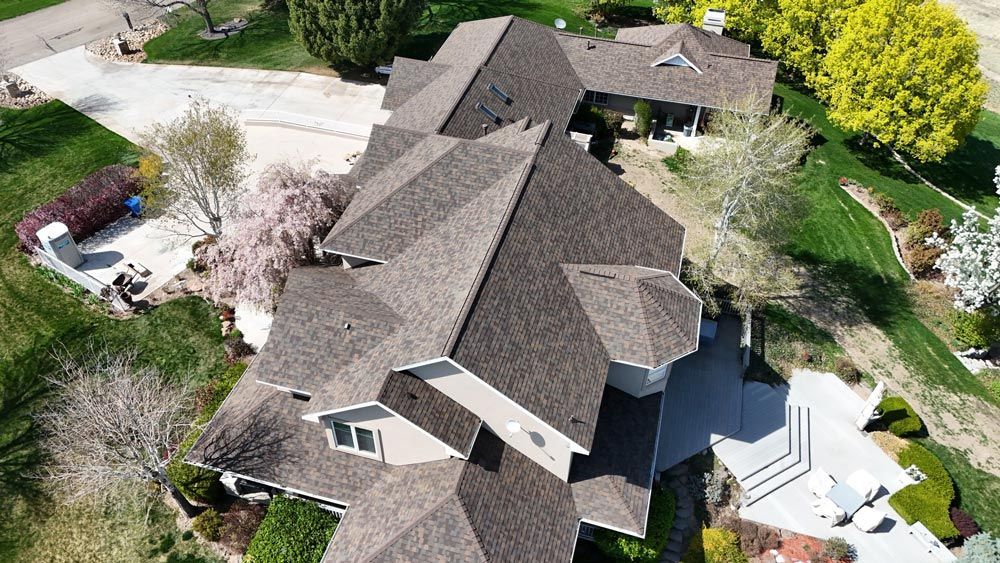
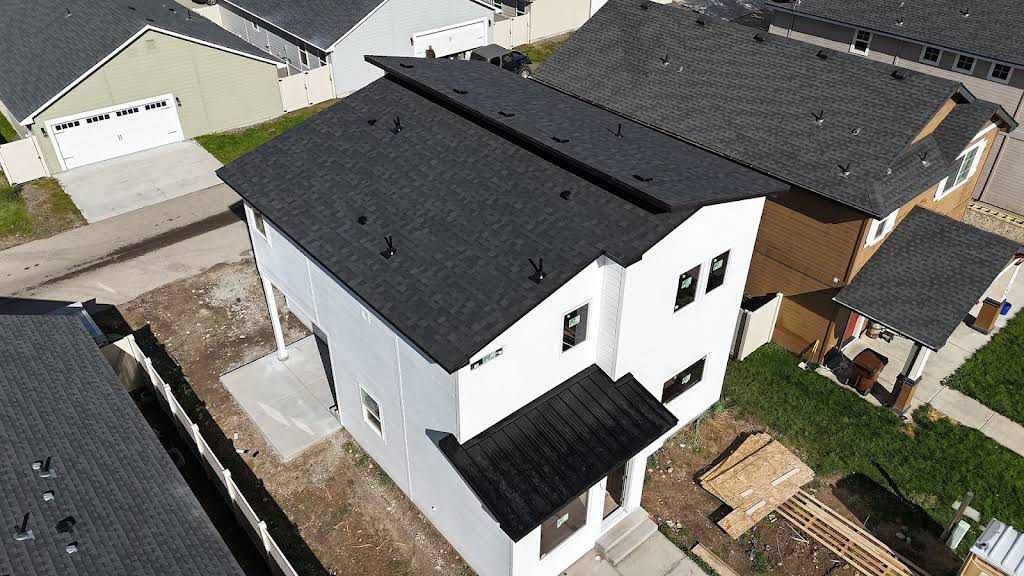
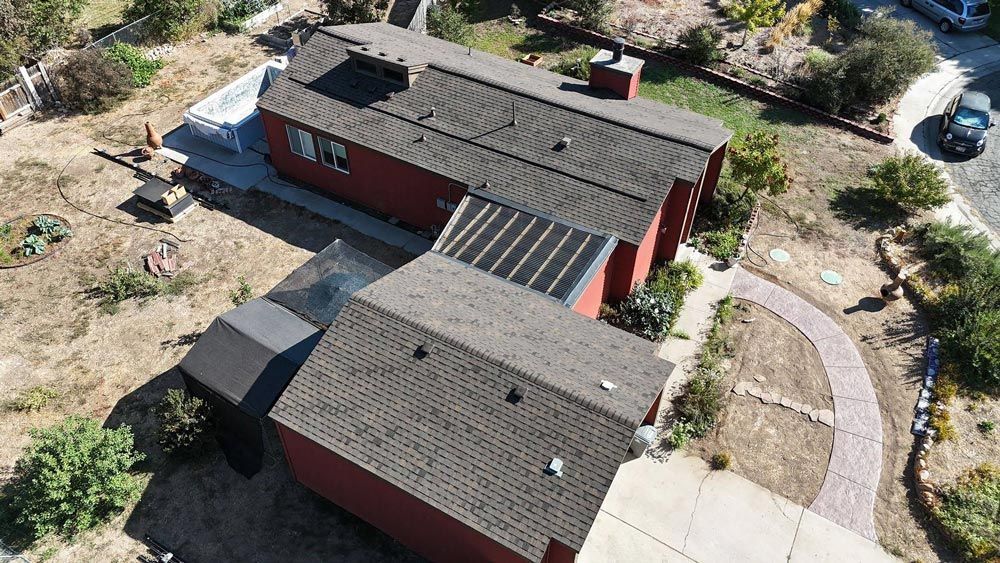
The Treasure Valley gets hit hard by hail and most homeowners have no idea how much damage a storm left behind until someone gets up on the roof and looks. Hail bruises shingles, knocks granules loose and compromises the layer that keeps water out, all without looking catastrophic from the street. We do drone scans on every storm damage call so you see exactly what happened before we talk about how to fix it.
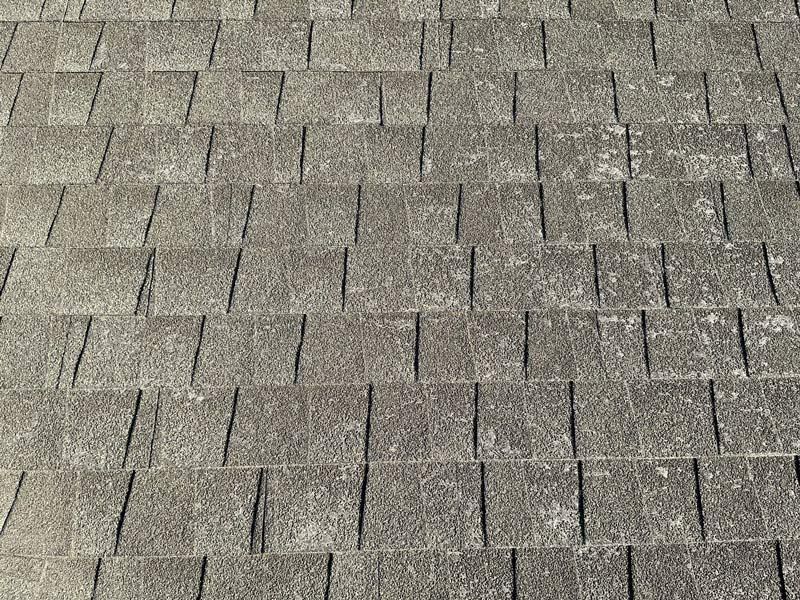
Asphalt shingles are the most common roofing material across Boise, Meridian and the Treasure Valley, and they take a beating from the region's temperature swings, UV exposure and seasonal storms. Cracking, curling, blistering and granule loss are all signs that shingles are breaking down and letting water get closer to your decking than it should. We assess the full condition of your shingle roof, repair damaged sections properly and let you know honestly whether a repair makes sense or whether replacement is the better call for your situation.
Flashing Repair
The metal that seals your roof at chimneys, walls, skylights and vents is responsible for more leaks than most people realize. When it lifts, rusts or separates, water finds a way in fast and it usually shows up somewhere inside that makes no obvious sense. We reseal and replace flashing the right way rather than just running caulk over a problem that will come back in six months.
Valley Repair
Where two roof planes meet is where your roof sheds the most water. Valleys take a beating every time it rains and they are particularly vulnerable to wear and ice damming in winter. When they start to go you see streaking, accelerated granule loss and thin spots along the seam. We repair or relay valley flashing and shingles depending on what the situation actually requires.
Fascia and Soffit Repair
When water gets past damaged shingles or flashing the fascia boards along your roofline are usually the first thing it hits. Rotted fascia spreads if it is not caught and it undermines the entire edge of the roof. We address fascia and soffit damage as part of the repair rather than leaving compromised wood behind a new patch and calling it done.
Flat Roof Repair
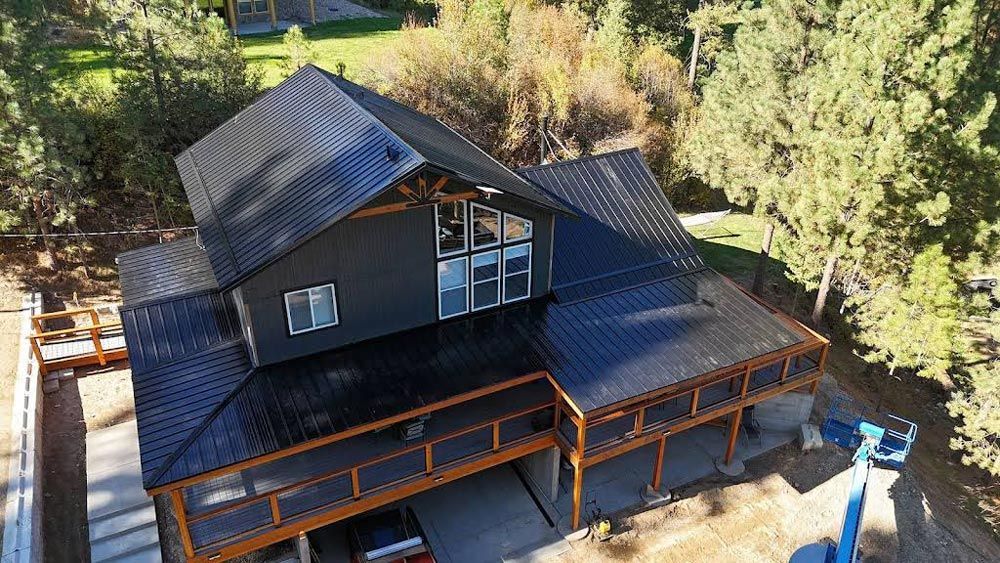
Flat and low-slope roofs fail differently than pitched roofs. Membrane punctures, separating seams, blocked drains and ponding water are all things we see regularly. We work on TPO and other flat roofing systems and repair them properly rather than putting a temporary fix over a problem that will show up again next season.
Metal roofs hold up well but they are not set-it-and-forget-it. Fasteners back out over time, seams separate and surface coatings wear in spots that eventually let moisture in. We reseal seams, replace backed-out fasteners and address corrosion before it has a chance to spread to areas that are still in good shape.
When a storm tears off shingles, a tree comes down on your roof or a sudden leak starts letting water into your home, you cannot wait days for someone to get back to you. We respond to emergency calls across Boise, Meridian, Nampa and the Treasure Valley and get to you fast to stop the damage from spreading. We tarp and secure what needs to be secured, assess what actually happened and get the repair done right rather than leaving you with a patch job that fails at the next storm.
TPO membranes are built to last but they are not immune to damage. Seams can separate from thermal expansion and contraction, punctures happen from foot traffic or falling debris, and flashing terminations work loose over time. When any of those fail, water gets under the membrane fast and spreads before you see it inside. We locate the failure point, weld or patch it correctly and inspect the surrounding membrane and drainage to make sure the repair holds long term.
Signs You Need Roof Repair
Most roof damage does not come with an obvious warning. It builds up quietly in places you are not looking until it gets bad enough that ignoring it is no longer an option. A few things worth paying attention to.
Water stains on your ceiling or walls
That brown ring that showed up after the last storm is not coming from directly above where you see it. Water travels along framing and decking before it drips through, sometimes a long way. The stain tells you something is wrong. It does not tell you where.
Missing or visibly damaged shingles
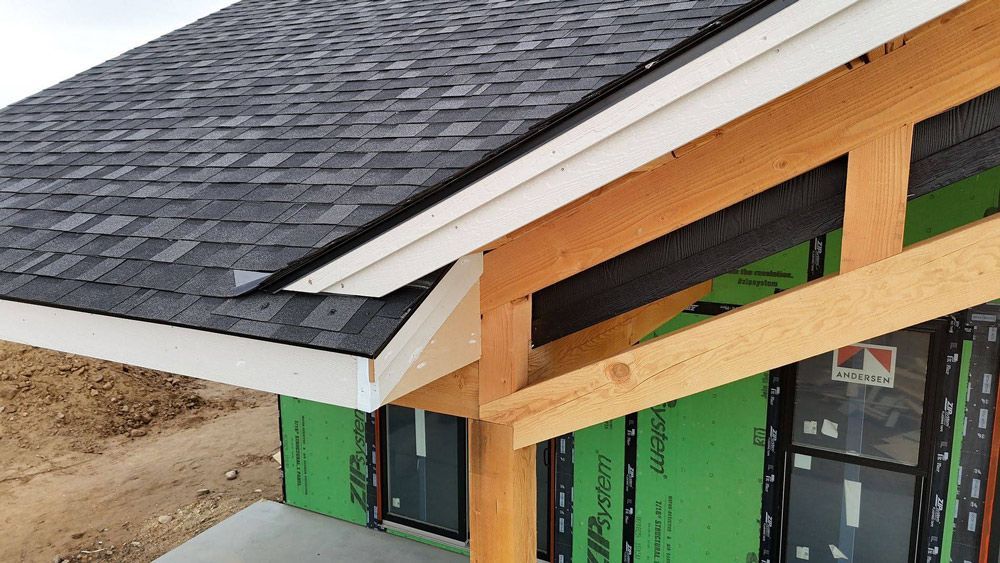
Worth taking a look from the ground with binoculars after any significant wind event. Shingles that are cracked, curling, buckling or gone entirely are not doing their job and every one of them is a point where water can get underneath.
Granules in your gutters
Some granule shedding from
asphalt shingles is normal. A lot of it is not. If you are cleaning your gutters and finding significant amounts of gritty dark material, your shingles are losing their protective coating faster than they should be. Hail accelerates this considerably.
Daylight in the attic
Go up there on a bright day and look around. If you can see light coming through the decking anywhere, water can get through that same spot. This is one of the easiest things to check yourself and one of the most commonly skipped.
Sagging or uneven sections
A roof that dips or waves when you look at it from the street has structural issues underneath, not just surface wear. This usually means water has been getting in long enough to affect the decking or framing and a patch is not going to solve it.
Lifted or rusted flashing
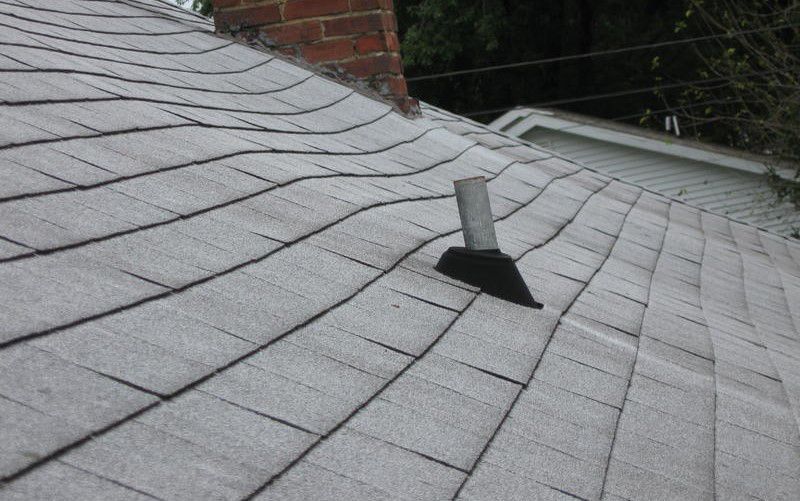
If you can see the flashing around your chimney or vents from the ground or through the attic, check whether it looks like it is sitting flat and sealed. Flashing that has pulled away or shows heavy corrosion is not doing its job anymore.
If any of this sounds familiar and you are not sure what you are actually dealing with, call us. We come out, do a drone scan and give you a clear picture before we talk about anything else. No charge for the estimate.
How Much Does Roof Repair Cost in Boise?
Nobody wants to hear "it depends" but when it comes to roof repair that really is the honest starting point. What we can do is give you the ranges we actually see on repair calls in the Boise, Meridian and Nampa area so you have something realistic to work with before anyone gets on your roof.
Minor repairs: $150 to $400
A few missing or cracked shingles. A small flashing reseal. A leak with a clear source and limited damage around it. Jobs like these are usually a few hours of work and do not require much material. They are also the category where waiting tends to be most costly because what is minor today has a way of becoming moderate by next spring.
Moderate repairs: $400 to $1,500
Storm damage across a larger section, valley work, multiple flashing failures, fascia and soffit repair alongside shingle replacement. These take more time, more material and a more thorough look to make sure everything affected gets found rather than just the obvious stuff. This is where most hail damage calls end up landing.
Major repairs: $1,500 to $4,000 and up
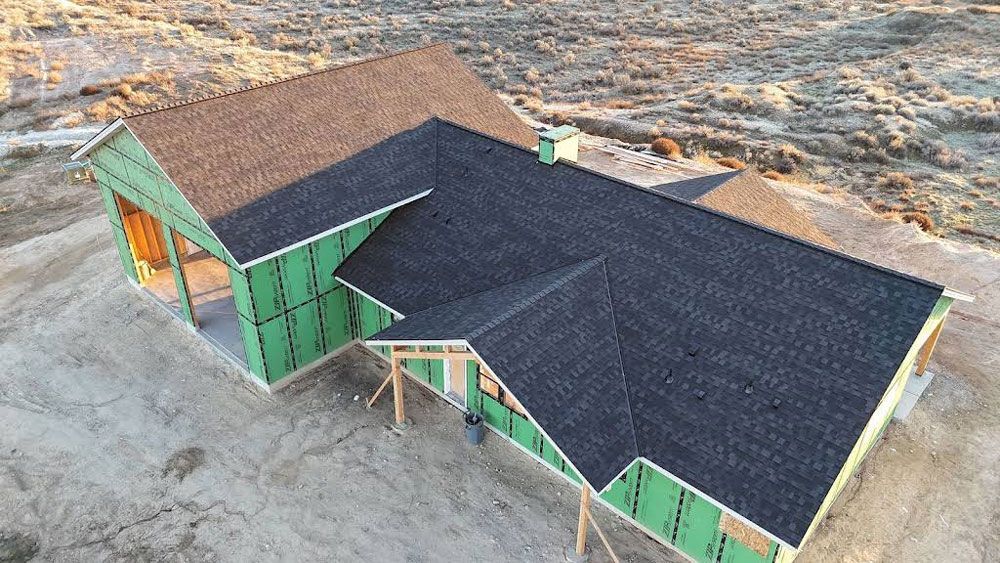
Significant damage across a large portion of the roof, structural issues in the decking, repairs on complex roofing systems or situations where water has been getting in long enough to affect framing underneath. At this level the conversation sometimes shifts toward whether repair or full replacement makes more financial sense and we have that conversation honestly based on what we actually see rather than what generates more revenue.
What moves a repair up or down in those ranges: the size of the damaged area, which roofing material is involved, how accessible the section is and whether there is any underlying decking damage underneath the surface problem.
We do not charge for the estimate and we do not take a deposit before starting work. You get a clear number before anyone picks up a tool and if we find something unexpected once we are up there we talk to you about it before we proceed.
Does Insurance Cover Roof Repair in Idaho?
Sometimes yes and sometimes no and the difference usually comes down to one question: was the damage caused by a sudden event or did it develop over time?
Idaho homeowners insurance policies generally cover damage from sudden and accidental causes. Hail is the most common one in the Treasure Valley and the damage it causes is often more significant than it looks from the ground. High winds, falling trees and similar events typically fall under covered perils as well. If a storm came through and your roof took a hit, there is a reasonable chance your policy covers the repair or replacement minus your deductible.
What policies almost never cover is gradual deterioration. A roof that has been slowly leaking for two years and has rotted decking underneath is going to be categorized as a maintenance issue by most insurers. So is a roof that is simply old and worn out. That distinction is not always obvious to homeowners and insurance companies are not always forthcoming about where they are drawing that line.
Documentation matters more than most people realize.
Before anything gets repaired or disturbed, your insurer needs evidence that the damage is storm-related. This is where things go sideways for a lot of homeowners who call their insurance company first, get an adjuster out, and then find out the documentation is thin. We use drone scanning on every storm damage assessment and produce detailed photographic records of the roof before any work begins. That documentation gives the adjuster something concrete to work with and it is considerably more useful than a few photos taken from the ground.
Having a contractor present during the adjuster visit helps.
Adjusters occasionally miss items or underestimate scope. It is not always intentional but it happens and it affects what you get paid out. We are happy to be present when the adjuster comes out for any Ridge Crest customer. We know what to look for and how to point it out in terms that matter to the claims process.
If you are not sure whether your situation warrants a claim,
call us before you call your insurance company. We can assess the damage first so you know what you are dealing with before you open a claim that could affect your premium.
Questions We Hear a Lot About Roof Repair
How long does a roof repair take?
Most repairs we do in the Boise and Meridian area are finished in a single day. A straightforward leak fix or a few replaced shingles might take two or three hours. Larger storm damage repairs covering a significant section of the roof can run a full day. We give you a realistic timeframe before we start and we communicate if anything changes once we are up there and see the full picture.
Can you repair a roof in the winter?
Yes, most of the time. A lot of homeowners assume roof work has to wait until spring and that assumption ends up costing them. Freeze-thaw cycles through an Idaho winter make water damage considerably worse. Shingle adhesive does behave differently in cold temperatures so technique matters and we account for that, but waiting through a winter for a repair that could be done now is rarely the right call.
How do I know if I need a repair or a full replacement?
Age of the roof, extent of the damage and how much useful life is left in the materials. A roof that is eight or ten years old with isolated storm damage is almost always a repair. A roof that is twenty-five years old with granule loss across the entire surface, multiple leak points and shingles that are brittle and curling is often more cost-effective to replace than to keep patching. We tell you honestly what we think and why. If a repair is the right answer we say so. There is no incentive for us to push a replacement when it is not warranted.
Will my insurance cover the roof repair?
If it was caused by a storm or another sudden covered event, probably yes, minus your deductible. Gradual wear and neglected maintenance are typically excluded. The most useful thing you can do before filing a claim is have the damage assessed and documented properly first. We do that for free and we can walk you through what we are seeing before you contact your insurer.
Do you offer financing?
Yes. If the repair cost is more than you want to handle out of pocket right now we have financing options available. Ask about it when you call.