How Long Does a Metal Roof Last?
Ridge Crest Roofing • May 4, 2026
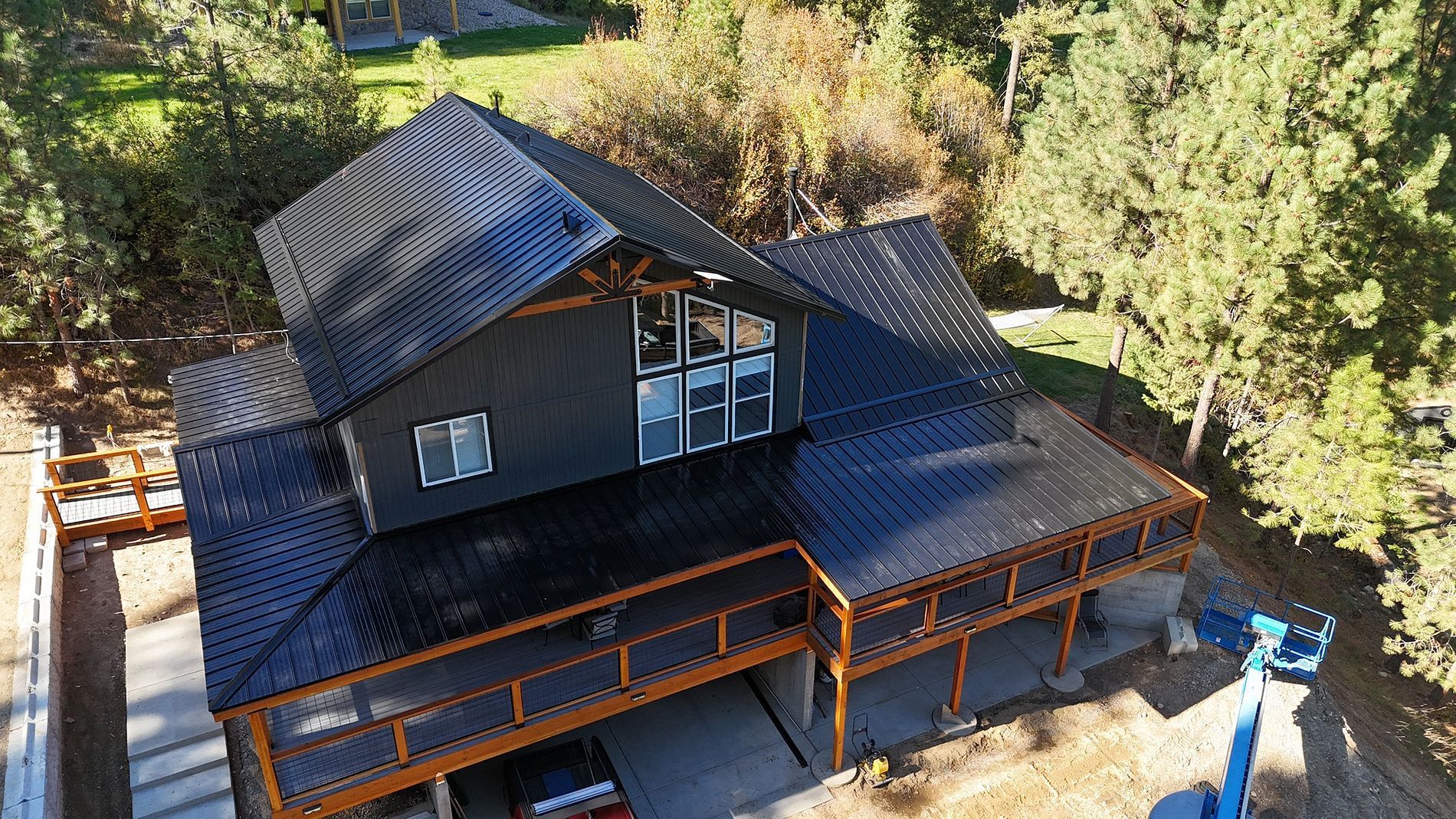
A metal roof typically lasts 40 to 70 years depending on the material and installation quality. Steel systems generally run 40 to 70 years, aluminum 50 or more, copper well over 100 years and corrugated panels 25 to 50 years. In Boise and the Treasure Valley a properly installed metal roof will outlast two or three asphalt shingle roofs on the same home.
Metal Roof Lifespan by Type
Not all metal roofing performs the same over time and the material you choose matters as much as how it gets installed. Here is what Boise and Treasure Valley homeowners can realistically expect from each system.
Steel — 40 to 70 years
Steel is the most common metal roofing material installed on residential homes in the Treasure Valley and for good reason. It is durable, cost-effective and widely available in profiles that work for everything from new construction in Meridian to re-roofing older homes in the North End. Galvanized steel uses a zinc coating to protect against rust and corrosion. Galvalume steel uses a zinc and aluminum alloy coating that tends to hold up better against the kind of UV exposure Boise sees through long hot summers. Properly installed steel roofing in Idaho, with quality underlayment and correct flashing at all penetrations, realistically delivers 40 to 70 years of service without significant maintenance demands.
Aluminum — 50 or more years
Aluminum does not rust which makes it a strong option in climates with significant moisture exposure. In Boise's semi-arid high desert climate aluminum is less commonly specified than steel simply because rust resistance is less of a driving concern here than in coastal or high-humidity regions. That said aluminum is lighter than steel, handles thermal expansion and contraction smoothly through Idaho's significant seasonal temperature swings and when installed correctly routinely delivers 50 or more years of performance. Worth considering for homeowners who want the lightest possible load on the structure or who are in lower Treasure Valley areas that see more moisture in winter months.
Copper — 100 or more years
Copper is in a different category entirely. It patinas over time, requires no painting or coating to maintain its protective properties and has documented lifespans well over 100 years on historical buildings. The cost reflects that longevity. Copper roofing runs significantly higher than steel or aluminum options and it is not a common choice for standard residential applications in the Treasure Valley. Where it shows up is on high-end custom homes, architectural feature elements and historic preservation projects where longevity and appearance over generations justify the investment. For most Boise and Meridian homeowners it is worth knowing about rather than actively considering.
Corrugated and Exposed Fastener Panels — 25 to 50 years
Corrugated metal panels are the most accessible entry point into metal roofing from a cost standpoint and they still deliver a substantially longer lifespan than asphalt shingles in Idaho's climate. The reason the lifespan range is wider than standing seam or solid metal systems is the exposed fasteners. The neoprene washers that seal the fastener penetrations are the system's vulnerability. Over time, particularly through Boise's significant temperature swings from summer to winter, those washers can harden, compress or crack and allow water infiltration at the fastener points. With periodic inspection and fastener maintenance corrugated systems deliver 40 to 50 years reliably. Without any attention to the fasteners the lower end of that range is more realistic.
Standing Seam — 50 to 70 years
Standing seam deserves its own mention alongside material type because the hidden fastener design changes the longevity equation significantly compared to exposed fastener systems using the same metal. With no exposed penetration points and panels that float on clips allowing for thermal movement, standing seam eliminates the primary wear point of corrugated systems. A steel standing seam roof in Boise installed correctly is realistically looking at the upper end of the steel lifespan range, 60 to 70 years, rather than the middle. For homeowners who plan to stay in a Treasure Valley home long term it is the system that makes the strongest case for itself on pure longevity.
How Long Does an Asphalt Shingle Roof Last?
This matters for the comparison and it is worth being specific about what asphalt shingles actually deliver in Idaho rather than quoting national averages that do not account for what Boise's climate does to roofing materials.
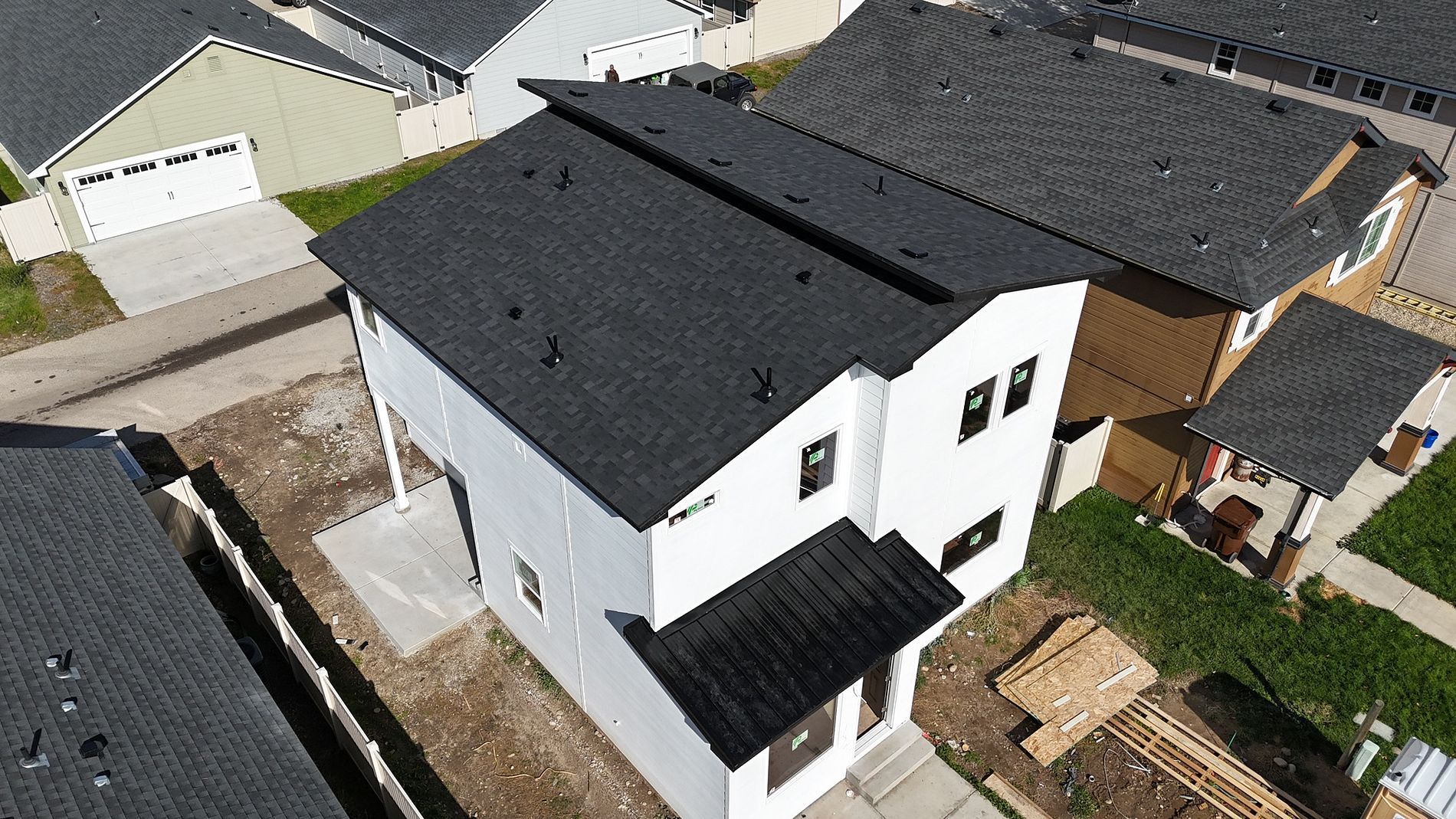
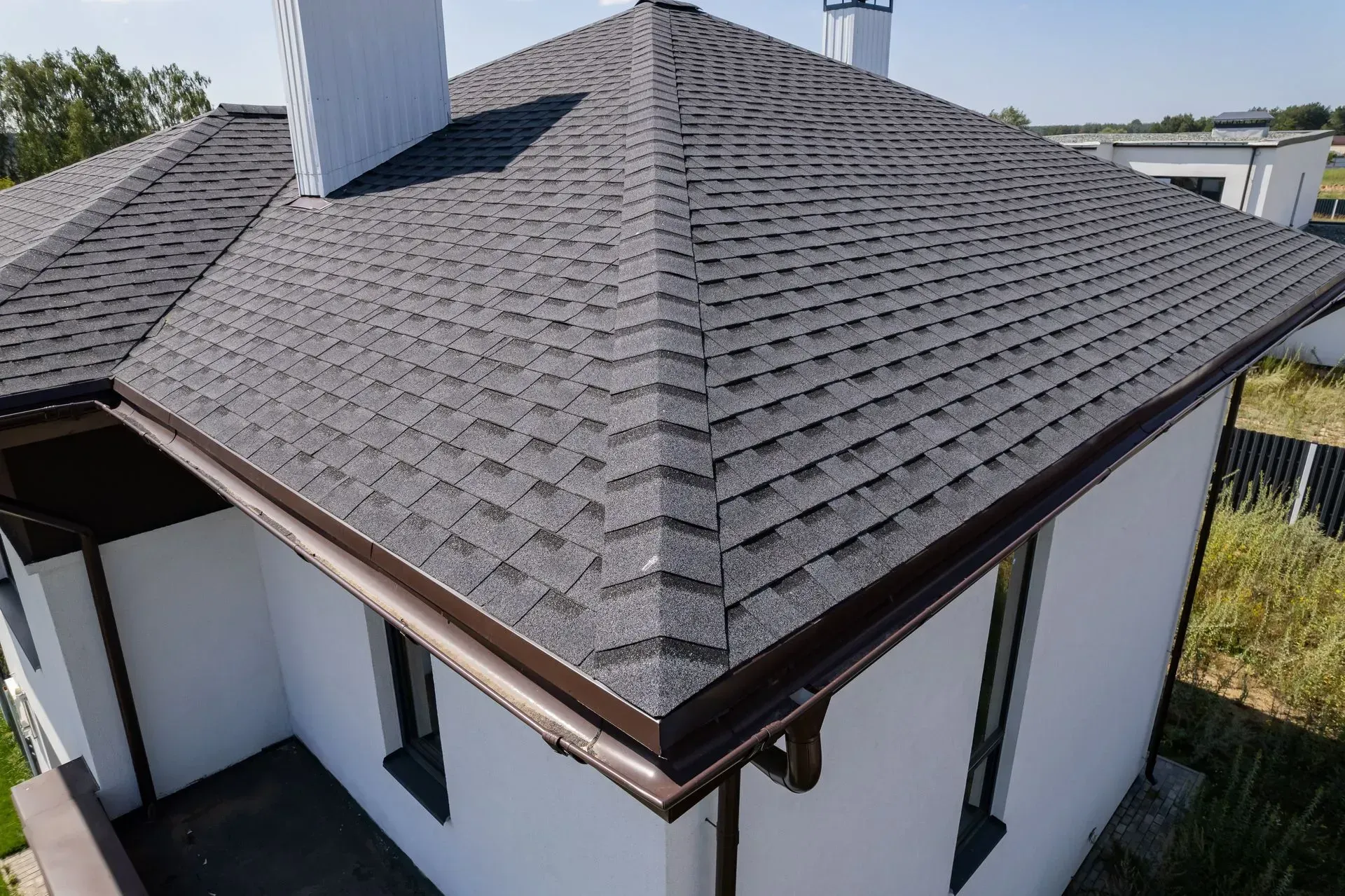
Nationally, asphalt shingles are often quoted as lasting 20 to 30 years. In Idaho that range compresses. Most Treasure Valley homeowners with standard three-tab shingles are looking at 15 to 20 years of reliable performance before the roof is showing meaningful wear. Architectural or dimensional shingles, the thicker laminated product that most Boise homes have been built with over the past two decades, generally run 20 to 25 years in Idaho conditions before replacement is the right call rather than continued patching.
Here is what Idaho's climate specifically does to asphalt shingles over time and why the national averages do not apply here.
UV exposure at Boise's elevation is significantly more intense than at sea level. Asphalt shingles lose granules as UV breaks down the asphalt binder over time and in Boise that degradation process runs faster than it does in lower elevation or cloudier climates. Granule loss accelerates once it starts and the surface becomes increasingly vulnerable to moisture once the granule layer thins.
Freeze-thaw cycles through Ada County winters stress the shingle surface and the underlayment below it repeatedly. Water that gets under a compromised shingle edge, freezes overnight and expands lifts and cracks the shingle further. Over multiple winters that process compounds into visible damage and eventually active leaks.
Hail is the accelerant that shortens many Boise asphalt roofs well before their expected lifespan. A significant Ada County hail event can take a 12-year-old shingle roof that had another decade of life and turn it into a replacement rather than a repair. Hail knocks granules loose at the point of impact, leaves the asphalt exposed and compromised and in many cases crosses the threshold that triggers a full insurance claim. We see this regularly across Meridian, Eagle and Nampa after the hail events that roll through the Treasure Valley in spring and early summer.
The practical upshot for a Boise homeowner comparing metal to asphalt is this. Over the lifespan of one metal roof in the Treasure Valley, 40 to 70 years, a homeowner with asphalt shingles would likely replace their roof two to three times. Each replacement means another round of tear-off, disposal, underlayment, materials and labor. The upfront cost difference between metal and asphalt looks considerably different when that math gets laid out over the actual timeframe involved.
Factors That Affect Metal Roof Lifespan in Boise
A metal roof rated for 50 years in one climate does not automatically deliver 50 years everywhere. Boise has specific conditions that work for and against metal roofing in ways worth understanding before you make a decision.
UV Exposure at Elevation
Boise sits at around 2,730 feet and UV intensity increases roughly 4 to 5 percent for every 1,000 feet above sea level. That is not a minor difference. The UV load hitting a Boise roof on a July afternoon is meaningfully higher than what the same roof would experience closer to sea level and that affects how the coating on a metal panel holds up over decades. Quality PVDF coatings, the fluoropolymer finish used on premium metal roofing, hold up well under that exposure. Cheaper polyester-based coatings fade and break down faster. It is one of the material conversations worth having specifically because of where we are and what our summers actually look like.
Freeze-thaw cycles
November through March in Ada County brings repeated cycles of freezing overnight and thawing during the day. Metal panels expand and contract with every swing. Standing seam systems handle this without stress because the panels float on clips and are free to move. Exposed fastener systems are more vulnerable to fastener hole elongation over years of that thermal cycling. Not a dealbreaker for exposed fastener metal but a reason to use quality neoprene washers from day one and inspect them periodically.
Hail
Ada County gets real hail. Metal handles it better than asphalt but the metal type and gauge matter. Aluminum dents more visibly than steel on a heavy impact. Heavier gauge steel and standing seam systems hold up to most Treasure Valley hail events without functional damage. A dented metal roof still performs perfectly, it just looks different, and that is worth knowing going in.
How it was installed
This is honestly the biggest factor of all. A metal roof installed correctly in Boise will perform at the upper end of its material's lifespan range. One with shortcuts at the flashing details, wrong underlayment for Idaho's climate or improper expansion accommodation built in will develop problems well before that. The material gets the credit when a roof lasts 60 years. The installation quality is what actually made that possible.
Ventilation underneath
Without adequate ventilation moisture accumulates between the metal and the decking below, particularly through Idaho's temperature swings, and accelerates corrosion on the underside of steel panels. A properly ventilated attic also helps the energy efficiency benefits of metal roofing actually show up on your utility bills rather than getting lost to heat backing up under the surface.
How much attention it gets over the years
Metal is genuinely low maintenance but not zero. Gutters packed with debris trap standing water against the roof edge. Branches sitting on metal hold moisture against the surface. Flashing sealants around penetrations benefit from a look every several years. None of it is demanding but the homeowners who get the full lifespan out of a metal roof give it occasional attention rather than assuming it needs nothing for 50 years straight.
Metal Roof vs Asphalt Shingles — Which Lasts Longer?
Metal. And in Idaho specifically it is not a close comparison.
But the lifespan number alone does not tell the whole story for a Treasure Valley homeowner. What actually matters is what that difference means for your wallet over the next 30 or 40 years on a specific Boise or Meridian property.
| Metal Roofing | Asphalt Shingles | |
|---|---|---|
| Expected lifespan in Idaho | 40 to 70 years | 15 to 25 years |
| Replacements over 70 years | One — the original installation | Two to four depending on hail events |
| Hail performance | Handles Ada County hail well | Surface damage common, often triggers full replacement |
| UV performance | Quality coatings hold up at Boise's elevation | Granule loss accelerates under high UV |
| Freeze-thaw performance | Designed to handle thermal movement | Shingles crack and lift over repeated cycles |
| Snow shedding | Sheds quickly | Holds snow and ice buildup |
| Fire resistance | Class A | Class A depending on product |
| Upfront cost | Higher | Lower |
| Total cost over 70 years | Lower when replacements factored in | Higher — multiple full replacement cycles |
| Maintenance | Minimal | Ongoing granule loss, cracking, flashing wear |
Here is the number that changes how most Boise homeowners think about this. An asphalt roof put on today will most likely need replacing once or twice before a metal roof installed at the same time reaches the end of its life. Each replacement is another full tear-off, another disposal run, another complete material and labor package. Metal costs more on day one and then the conversation is basically over for the next 40 to 70 years.
And then there is the hail variable which national comparisons almost never account for properly. Ada County gets real hail events. A significant storm can take a 12-year-old shingle roof that had years of life left and push it straight into replacement. We see it regularly across Meridian, Nampa and Eagle after the spring and early summer storms roll through. Metal roofing either comes through those events without functional damage or picks up cosmetic marks that do not affect how the roof performs. That difference alone changes the long-term cost math considerably when you are living in this part of Idaho rather than somewhere the weather is more predictable.
Staying in your home for the next 20 years or more? Metal makes strong financial sense. Planning to sell in the next few years? Asphalt is probably the more practical call because you will not be around long enough to see the return on the higher upfront investment.
Considering metal roofing for your Boise home? Ridge Crest Roofing provides free estimates across Boise, Meridian, Eagle, Nampa and the Treasure Valley. No deposit, no contract. Get a free estimate here or call (208) 353-1798.
Signs Your Metal Roof Needs Replacement
Metal roofing lasts a long time but it is not permanent. Knowing what to look for helps you catch problems before they turn into bigger ones and helps you make an informed decision about whether a roof repair makes sense or whether the roof has reached the end of its useful life.
Rust and corrosion spreading across panel surfaces is one of the clearer signs that a steel roof is past its prime. Surface rust from a scratch or a small chip in the coating is repairable early on. Rust that has spread across large sections of multiple panels means the protective coating has broken down broadly and the metal underneath is compromised in a way that patching cannot address long term.
Fastener problems on exposed fastener systems are worth taking seriously. Neoprene washers that have hardened, cracked or compressed flat are no longer sealing the penetration point. If you are seeing rust streaks running down from fastener locations or finding water intrusion near the screws during heavy rain, the fasteners and washers need attention. On an older system with widespread fastener deterioration the question becomes whether resealing makes economic sense versus replacing the panels.
Sealant failure around penetrations, flashings and ridge caps shows up as cracking, shrinking or pulling away from the surface it was bonded to. Sealant that has failed around a chimney, skylight, vent pipe or roof-to-wall transition is an active water intrusion risk. On a relatively young metal roof this is a repair situation. On a roof that is already 40 or 50 years old with widespread sealant failure across multiple points it may be a signal that the system overall is approaching replacement.
Significant panel damage from a major impact event, whether hail, a falling tree limb or other debris, warrants a professional assessment before deciding between repair and replacement. A single damaged panel on an otherwise sound system is almost always a repair. Widespread impact damage across a large portion of the roof on a system that was already aging is a different conversation.
Persistent leaks that keep returning after repairs are the most telling sign of all. A metal roof that has been repaired at the same location multiple times without the leak resolving is usually telling you something about the underlying system rather than the specific repair point. Could be deck deterioration underneath, a flashing detail that was never right from the original installation or panel degradation that has progressed beyond what surface repairs can address.
Metal Roofing in Boise — What to Expect from Ridge Crest
We have been roofing homes in Boise and the Treasure Valley for over 35 years so we have seen pretty much every situation a residential metal roof project can throw at you.
When you call us we come out to take a look. We drone the roof, get a real picture of what is going on up there and put together a written estimate that tells you exactly what the job costs before you commit to anything. No deposit to get on the schedule. No contract. Reviews from Boise and Meridian homeowners mention this a lot actually, that we were straightforward with pricing and nothing changed between what we quoted and what they paid.
We talk through your options when we are there. What makes sense for your home is not always the same as what makes sense for your neighbor's and we would rather put the right system on your roof than push you toward something that does not fit your situation.
Jobs typically wrap in a day or two. Crew shows up, gets it done, cleans up and does a walkthrough with you before leaving. One of our Boise customers said their roof finished in a day while their neighbor's took three with a different company. That is just how we run things out here.
Financing is available too if paying everything upfront does not work right now.
Learn more about our metal roofing services or call (208) 353-1798.
Metal Roofing Questions Boise and Treasure Valley Homeowners Ask Us
Is metal roofing worth it in Boise?
For most homeowners planning to stay in their home long term, yes. Boise's climate is genuinely hard on asphalt shingles. High UV at elevation, freeze-thaw cycles through winter, hail events that come through Ada County fast and hit hard. Metal handles all of those conditions better and lasts two to three times longer than asphalt in Idaho. You pay more upfront and then you largely do not think about your roof again for decades. Whether that trade makes sense depends on how long you are planning to stay and what your budget looks like today.
How much does metal roofing cost in Boise?
Standing seam runs roughly $15 to $25 per square foot fully installed in the Treasure Valley. Corrugated and exposed fastener panels come in closer to $8 to $15 per square foot installed. On a typical Boise or Meridian home that puts standing seam in the $30,000 to $50,000 range and corrugated panels around $16,000 to $30,000. Variables include roof pitch, complexity, story count and existing layers to tear off. We come out, drone the roof and give you a written estimate with the full breakdown before anything gets scheduled.
Can a metal roof be repaired or does it always need full replacement?
Most metal roof problems are repairable, particularly on younger systems. Flashing issues, fastener and washer problems on exposed fastener systems, sealant failure around penetrations, isolated panel damage from hail or impact. Where replacement becomes the conversation is when corrosion has spread broadly across panels, when fastener deterioration is widespread across an aging system or when persistent leaks keep returning at the same location after multiple repairs. We look at the full picture when we come out and give you a straight answer on whether repair or replacement makes more sense for your specific situation.
Does a metal roof make noise when it rains in Boise?
With proper installation it really is not a noticeable issue. The key is what goes underneath. Quality underlayment and solid decking absorb sound effectively and a residential metal roof installed correctly in Boise is not meaningfully louder than asphalt during rain. Where metal gets loud is on outbuildings and agricultural structures with open framing and no underlayment underneath. That is a different installation scenario from a residential home and the comparison does not really apply.
Does metal roofing get too hot in Boise summers?
Actually the opposite. Metal roofing reflects solar radiation rather than absorbing it which is one of the reasons it makes particular sense in Boise's climate. Dark asphalt shingles absorb heat and radiate it into the attic and living space below, driving up cooling costs through July and August. Metal roofing with a quality reflective coating keeps attic temperatures lower and reduces the load on your HVAC system through Boise's sustained summer heat. Real money on energy bills over the years the roof is on the house.
How long does a metal roof last in Idaho specifically?
Steel systems generally run 40 to 70 years in Idaho conditions. Aluminum tends toward 50 or more years. Corrugated and exposed fastener systems land in the 25 to 50 year range depending on how well the fasteners and washers are maintained through Idaho's significant temperature swings. What affects that range most in Boise and the Treasure Valley is installation quality, coating quality given our UV exposure at elevation and how much periodic attention the roof gets over the decades.
What happens to a metal roof after a hail storm in the Treasure Valley?
Depends on the system and the severity of the storm. Most Treasure Valley hail events leave steel and standing seam metal roofs with cosmetic marks at worst, surface denting that does not affect how the roof performs. Softer metals like aluminum can show more visible denting on a serious impact. Either way metal handles Ada County hail significantly better than asphalt shingles which often sustain granule loss and cracking that crosses into replacement territory after a significant storm. If you have a metal roof and a major hail event comes through, we are happy to come out and take a look and tell you honestly what we see.
Get a Free Metal Roofing Estimate in Boise or Meridian
If you are weighing metal roofing for your Treasure Valley home or just want to know what the numbers look like for your specific property, call us at (208) 353-1798 Monday through Friday 8am to 5pm. We come out, drone assess the roof and put together a detailed written estimate that lays out everything clearly before you commit to anything.
No deposit. No contract. No number that changes between the estimate and the invoice. Been doing it this way for over 35 years across Boise, Meridian, Nampa, Eagle, Star and Kuna and that is not changing.
Recent Posts